Contenido basado en la Biblia
© 2026 Après Enlèvement – Todos los derechos reservados
SOBRE NOSOTROS
Après Enlèvement explora las profecías bíblicas, el Arrebatamiento de la Iglesia, el fin de los tiempos y la fe cristiana.
Descubra lo que la Biblia enseña sobre el regreso de
Jesucristo y cómo prepararse para ello.
SÍGUENOS
© 2026 Après Enlèvement – Todos los derechos reservados
SOBRE NOSOTROS
Après Enlèvement explora las profecías bíblicas, el Arrebatamiento de la Iglesia, el fin de los tiempos y la fe cristiana.
Descubra lo que la Biblia enseña sobre el regreso de Jesucristo y cómo prepararse para este acontecimiento.
SÍGUENOS
📖 UNDERSTAND THE BIBLE
🌍 FIN DE LOS TIEMPOS
📖 COMPRENDER LA BIBLIA
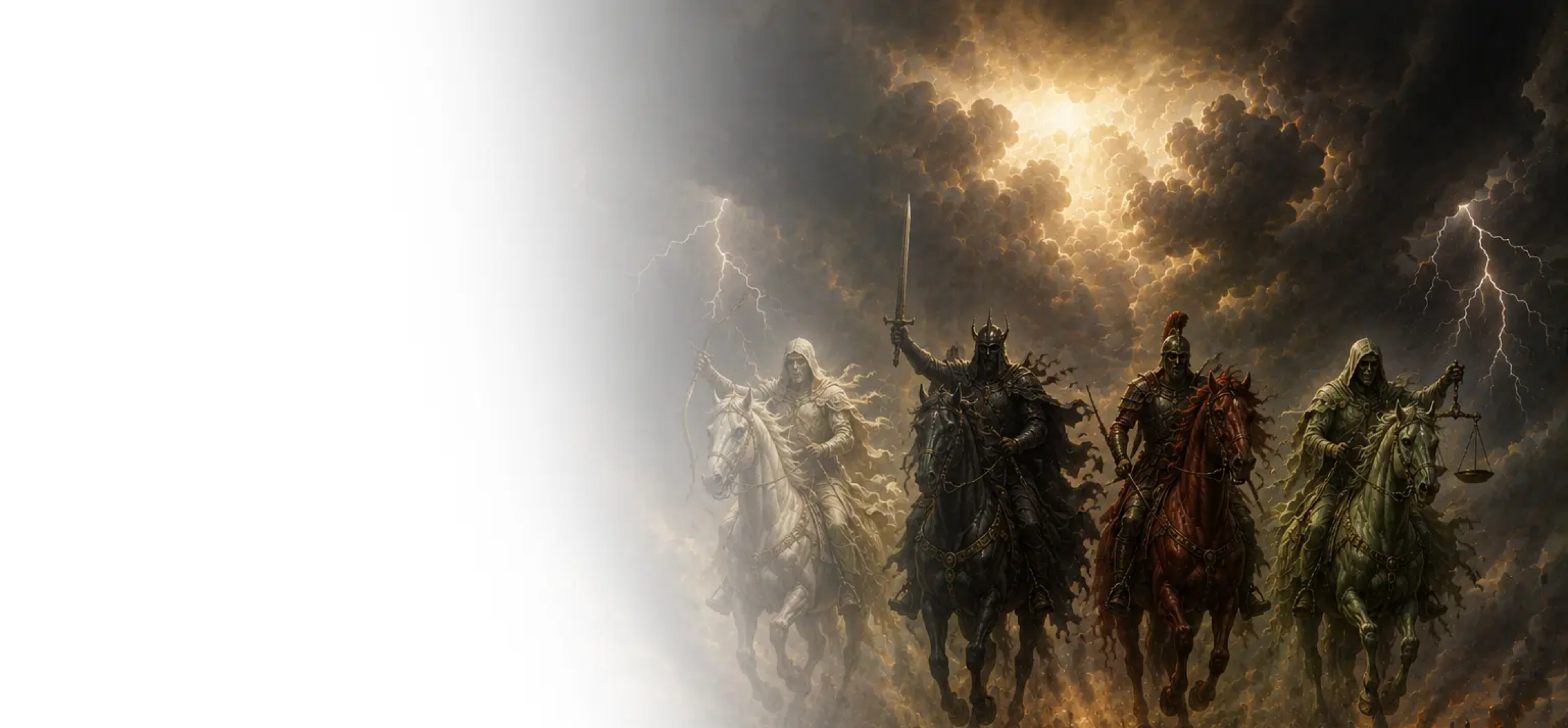
1 Y vi cuando el Cordero abrió uno de los sellos, y oí a uno de los cuatro seres vivientes decir con voz como de trueno: «Ven y mira».
2 Y miré, y he aquí un caballo blanco; y el que lo montaba tenía un arco; y le fue dada una corona, y salió venciendo y para vencer.
3 Y cuando hubo abierto el segundo sello, oí al segundo ser viviente decir: «Ven y mira».
4 Y salió otro caballo, rojo; y al que lo montaba le fue dado poder para quitar la paz de la tierra, y para que se matasen unos a otros; y le fue dada una gran espada.
5 Y cuando hubo abierto el tercer sello, oí al tercer ser viviente decir: «Ven y mira». Y miré, y he aquí un caballo negro; y el que lo montaba tenía una balanza en su mano.
6 Y oí una voz en medio de los cuatro seres vivientes que decía: «Una medida de trigo por un denario, y tres medidas de cebada por un denario; pero no dañes el aceite ni el vino».
7 Y cuando hubo abierto el cuarto sello, oí la voz del cuarto ser viviente que decía: «Ven y mira».
8 Y miré, y he aquí un caballo pálido; y el que lo montaba tenía por nombre Muerte, y el Hades le seguía. Y les fue dada autoridad sobre la cuarta parte de la tierra, para matar con espada, con hambre, con muerte y con las fieras de la tierra.
En este pasaje, Juan describe los primeros cuatro sellos abiertos por Jesús, el Cordero. Estos sellos introducen los primeros grandes juicios que afectarán a la tierra durante la primera mitad de la Tribulación.
El primer sello revela un caballo blanco y su jinete, que sale venciendo y para vencer. Este jinete representa al Anticristo, quien buscará establecer su poder y extender su autoridad sobre las naciones.
El segundo sello revela un caballo rojo. La paz es retirada de la tierra y las personas se vuelven unas contra otras. Este caballo representa la guerra, que seguirá al ascenso del Anticristo y a su establecimiento del poder.
El tercer sello revela un caballo negro que lleva una balanza. Los precios extremadamente elevados del trigo y la cebada muestran la gravedad de la escasez de alimentos y de la hambruna que afectará a la población.
Finalmente, el cuarto sello revela un caballo pálido cuyo jinete se llama Muerte, seguido por el Hades. La guerra, el hambre, las enfermedades y otras calamidades provocarán una pérdida masiva de vidas, afectando a una cuarta parte de la tierra.
Estos cuatro sellos muestran una progresión dramática: conquista, guerra, hambre y muerte. Constituyen los primeros juicios de la Tribulación y preparan el camino para acontecimientos cada vez más graves que seguirán.
9 Y cuando hubo abierto el quinto sello, vi debajo del altar las almas de los que habían sido muertos por causa de la palabra de Dios y por el testimonio que habían mantenido.
10 Y clamaban a gran voz, diciendo: «¿Hasta cuándo, Señor, santo y verdadero, no juzgas y vengas nuestra sangre sobre los que habitan en la tierra?»
11 Y se les dieron vestiduras blancas a cada uno de ellos, y se les dijo que descansaran todavía un poco de tiempo, hasta que se completara el número de sus consiervos y de sus hermanos que también habían de ser muertos como ellos.
En este pasaje, Juan recibe una visión anticipada de los acontecimientos relacionados con el quinto sello. Ve las almas de aquellos que serán muertos por causa de la Palabra de Dios y por el testimonio que mantendrán. Ya están en la presencia de Dios y claman por justicia a causa de la sangre que ha sido derramada. Esta visión revela de antemano el destino de quienes permanecerán fieles a Dios durante la Tribulación a pesar de la persecución.
Este acontecimiento tiene lugar durante la primera mitad de la Tribulación. Estas personas no forman parte de la Iglesia, porque la Iglesia ya habrá sido arrebatada. Serán personas que se volverán a Jesús durante la Tribulación y que serán asesinadas por causa de su fe y de su testimonio.
Dios les da vestiduras blancas, que simbolizan pureza, justicia y su pertenencia a Él, pero les pide que esperen todavía un poco de tiempo. Otros siervos y hermanos también tendrán que morir por su fidelidad antes de que se complete el número establecido por Dios.
Este pasaje muestra que, después del Arrebatamiento de la Iglesia, las personas todavía podrán volverse a Jesús y recibir la salvación. Sin embargo, seguirle durante la Tribulación tendrá un costo muy elevado. Algunos permanecerán fieles hasta la muerte, rechazando al Anticristo y negándose a abandonar su testimonio de Jesús. Su martirio demostrará que habrán elegido seguir y servir a Jesús a pesar de la persecución y de la amenaza de muerte.
12 And I beheld when he had opened the sixth seal, and, lo, there was a great earthquake; and the sun became black as sackcloth of hair, and the moon became as blood,
13 And the stars of heaven fell unto the earth, even as a fig tree casteth her untimely figs, when she is shaken of a mighty wind.
14 And the heaven departed as a scroll when it is rolled together; and every mountain and island were moved out of their places.
15 And the kings of the earth, and the great men, and the rich men, and the chief captains, and the mighty men, and every bondman, and every free man, hid themselves in the dens and in the rocks of the mountains;
16 And said to the mountains and rocks, Fall on us, and hide us from the face of him that sitteth on the throne, and from the wrath of the Lamb:
17 For the great day of his wrath is come; and who shall be able to stand?
In this passage, John describes the sixth seal, which introduces extraordinary cosmic disturbances. A great earthquake occurs, the sun becomes black, the moon appears as blood, and the stars fall from heaven. The heavens appear to be rolled up like a scroll, while mountains and islands are moved from their places.
This event takes place during the first half of the Tribulation, following the judgments revealed by the first five seals. These signs show that God's judgments are becoming increasingly visible and terrifying, affecting both humanity and the natural world.
The reaction of the inhabitants of the earth is particularly revealing. Kings, powerful people, the rich, military leaders, slaves, and free people all seek to hide, recognizing that these events are connected with God's judgment. Yet instead of turning to Jesus, they seek to hide from the One who sits on the throne and from the wrath of the Lamb.
The sixth seal therefore marks a dramatic intensification of God's judgments and reveals that the great day of His wrath has come. It prepares the way for the increasingly severe judgments that will follow during the Tribulation.
15 The kings of the earth, and the great men, and the rich men, and the chief captains, and the mighty men, and every bondman, and every free man, hid themselves in the dens and in the rocks of the mountains.
16 And said to the mountains and rocks, Fall on us, and hide us from the face of him that sitteth on the throne, and from the wrath of the Lamb:
17 For the great day of his wrath is come; and who shall be able to stand?
In this passage, John describes the reaction of every level of society to the terrifying events of the sixth seal. Kings, military leaders, the rich, the powerful, slaves, and free people all seek to hide. No social position, wealth, or human power can protect them from God's judgment.
What is particularly striking is that they recognize that these events are connected with God's judgment and acknowledge the wrath of the Lamb.
Yet they do not turn to Jesus for salvation. Instead, they seek to hide from His presence, revealing the hardness of the human heart in the face of divine judgment.
This scene takes place during the first half of the Tribulation and shows the increasing intensity of God's judgments. The statement “the great day of his wrath is come” announces a period of increasingly severe judgment that will continue as the Tribulation progresses.