Content based on the Bible
© 2026 Après l’Enlèvement – All Rights Reserved
ABOUT
Après Enlèvement explores biblical prophecy, the Rapture of the Church, the End Times, and the Christian faith.
Discover what the Bible teaches about the return of Jesus Christ and how to be ready for it.
FOLLOW US
© 2026 Après l’Enlèvement – All Rights Reserved
ABOUT
Après Enlèvement explores biblical prophecy, the Rapture of the Church, the End Times, and the Christian faith.
Discover what the Bible teaches about the return of Jesus Christ and how to be ready for it.
FOLLOW US
📖 UNDERSTAND THE BIBLE
1 And I saw when the Lamb opened one of the seals, and I heard, as it were the noise of thunder, one of the four beasts saying, Come and see.
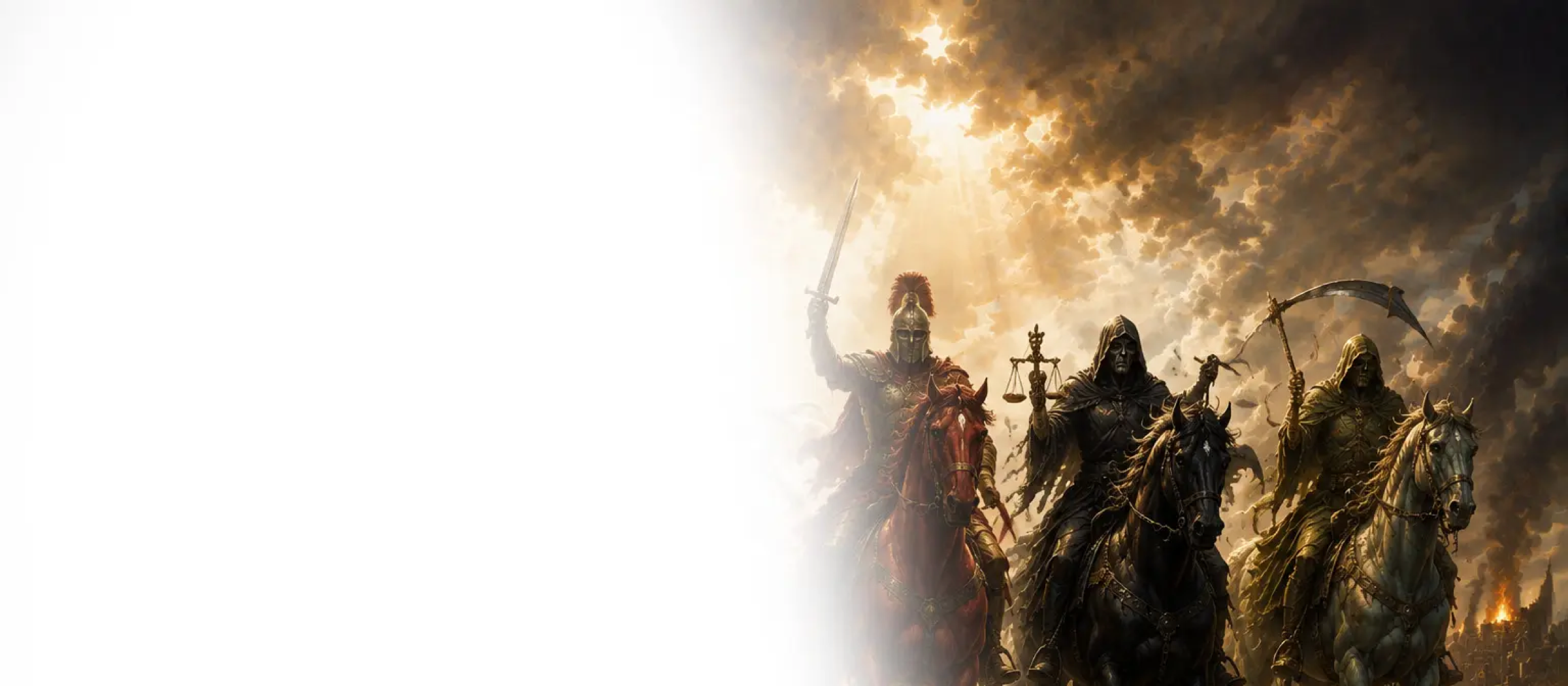
2 And I saw, and behold a white horse: and he that sat on him had a bow; and a crown was given unto him: and he went forth conquering, and to conquer.
In this passage, Jesus, the Lamb of God, begins to open the seven seals of God’s book. The opening of the first seal marks the beginning of the events of the Tribulation and the unfolding of God’s judgment plan upon the earth.
John sees a white horse with a rider who carries a bow and receives a crown. This rider represents the Antichrist, who appears at the beginning of the Tribulation. He presents himself as a leader capable of bringing peace and stability to the world, but his true purpose is conquest and domination.
The white horse represents an appearance of victory and peace. This rider seeks to imitate the image of a savior, but unlike Jesus, his victory is based on deception, political power, and human authority. His bow, without mention of arrows, suggests a conquest achieved mainly through influence, alliances, and control rather than immediate warfare.
The crown given to him shows that he receives authority for a limited time. His rise will be rapid, and he will gain significant influence over the nations.
This event corresponds to the appearance of the Antichrist, who will establish his worldwide influence at the beginning of the seven-year Tribulation. His rule will begin with an apparent period of peace, but it will eventually lead to greater judgments and suffering upon humanity.
This passage therefore reveals the first major event of the judgments of Revelation: a false conqueror appears on the world stage, offering a false peace before revealing his true nature.
3 And when he had opened the second seal, I heard the second beast say, Come and see.
4 And there went out another horse that was red: and power was given to him that sat thereon to take peace from the earth, and that they should kill one another: and there was given unto him a great sword.
In this passage, Jesus, the Lamb, opens the second seal of God’s book, bringing a new judgment that follows the appearance of the first rider. After a period of false peace and conquest, another major event affects the earth.
John sees a red horse with a rider who is given power to remove peace from the earth. This rider represents war and the conflicts that will break out among the nations.
The color red symbolizes bloodshed and violence. The authority given to this rider shows that these wars are not simply random events, but are part of the unfolding of God’s judgment upon a world that has rejected His authority.
The great sword represents the escalation of armed conflicts and the many lives that will be lost during this period. Nations will enter a time of turmoil where peace will be replaced by warfare and violence.
This event corresponds to the second seal of the Tribulation, following the appearance of the Antichrist. The initial false peace will be followed by a period of wars that will prepare the way for the following judgments and increase suffering on the earth.
This passage shows that when humanity seeks peace based only on human leaders, that peace can be temporary and fragile. Only Jesus has the true authority to establish lasting peace.
5 And when he had opened the third seal, I heard the third beast say, Come and see. And I beheld, and lo a black horse; and he that sat on him had a pair of balances in his hand.
6 And I heard a voice in the midst of the four beasts say, A measure of wheat for a penny, and three measures of barley for a penny; and see thou hurt not the oil and the wine.
In this passage, Jesus, the Lamb, opens the third seal, and a new judgment affects the earth. After the appearance of the Antichrist and the wars that follow, John sees a black horse whose rider holds a pair of balances.
This rider represents famine and economic crisis that will strike humanity during the Tribulation. The balances symbolize the strict measurement of food supplies, indicating a time when resources become scarce and prices rise dramatically.
The mention of wheat and barley being sold at extremely high prices shows a situation of severe shortage. Basic necessities needed for survival become difficult to obtain, forcing people to spend almost all of their resources just to have enough food.
The reference to oil and wine indicates that some less essential goods or luxury products are not affected in the same way as basic food supplies. This highlights the inequalities and hardships that will characterize this period of crisis.
This event corresponds to the third seal of the Tribulation, following the appearance of the Antichrist and the outbreak of wars. The famine will increase human suffering and prepare the way for the judgments that follow.
This passage shows the tragic consequences of a world marked by sin, conflict, and rejection of God: peace disappears, resources become limited, and humanity discovers its inability to fully control its own future.
7 And when he had opened the fourth seal, I heard the voice of the fourth beast say, Come and see.
8 And I looked, and behold a pale horse: and his name that sat on him was Death, and Hell followed with him. And power was given unto them over the fourth part of the earth, to kill with sword, and with hunger, and with death, and with the beasts of the earth.
In this passage, Jesus, the Lamb, opens the fourth seal, revealing the fourth horseman of Revelation. After conquest, wars, and famine, another judgment comes upon humanity.
John sees a pale horse whose rider is named Death. The color of the horse represents decay and death. This rider symbolizes mass death resulting from the previous judgments and from new disasters affecting the earth.
The passage states that Hell (Hades) follows with Death, showing that many people will perish and enter the realm of the dead. This image emphasizes the seriousness of this period and the enormous scale of human loss.
The authority given over a fourth part of the earth shows that this judgment will have a devastating worldwide impact, while still remaining under God’s sovereign control. The causes mentioned — war, famine, disease, and wild beasts — reveal several ways through which death will spread.
This event corresponds to the fourth seal of the Tribulation, following the appearance of the Antichrist, global conflicts, and famine. The condition of the world will continue to deteriorate as God’s judgments unfold.
This passage reveals the tragic consequences of a world separated from God: violence, scarcity, and suffering lead to unprecedented death. It also shows that even during judgment, God remains sovereign over events and limits their extent according to His plan.