Content based on the Bible
© 2026 Après l’Enlèvement – All Rights Reserved
ABOUT
Après Enlèvement explores biblical prophecy, the Rapture of the Church, the End Times, and the Christian faith.
Discover what the Bible teaches about the return of Jesus Christ and how to be ready for it.
FOLLOW US
© 2026 Après l’Enlèvement – All Rights Reserved
ABOUT
Après Enlèvement explores biblical prophecy, the Rapture of the Church, the End Times, and the Christian faith.
Discover what the Bible teaches about the return of Jesus Christ and how to be ready for it.
FOLLOW US
📖 UNDERSTAND THE BIBLE
1 After this I looked, and, behold, a door was opened in heaven: and the first voice which I heard was as it were of a trumpet talking with me; which said, Come up hither, and I will shew thee things which must be hereafter.
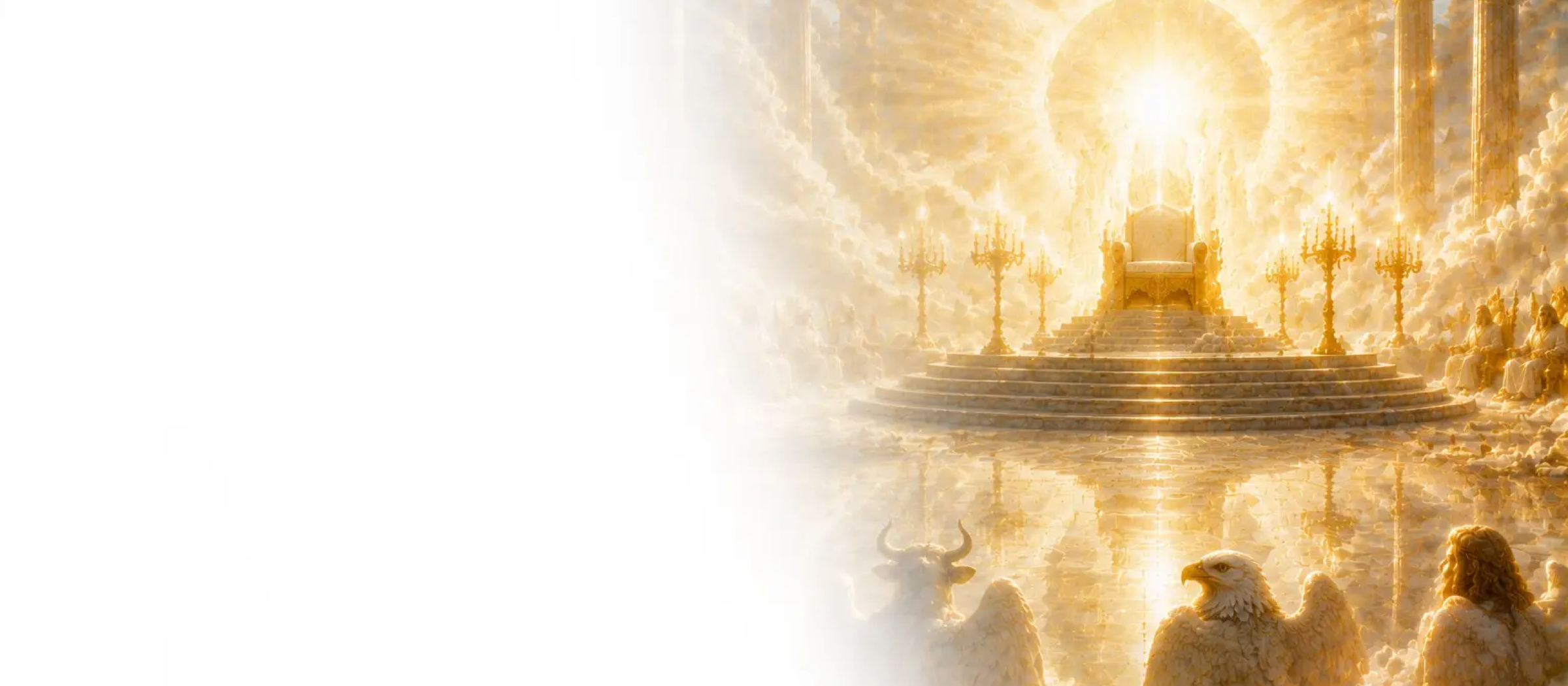
2 And immediately I was in the spirit: and, behold, a throne was set in heaven, and one sat on the throne.
3 And he that sat was to look upon like a jasper and a sardine stone: and there was a rainbow round about the throne, in sight like unto an emerald.
4 And round about the throne were four and twenty seats: and upon the seats I saw four and twenty elders sitting, clothed in white raiment; and they had on their heads crowns of gold.
5 And out of the throne proceeded lightnings and thunderings and voices: and there were seven lamps of fire burning before the throne, which are the seven Spirits of God.
6 And before the throne there was a sea of glass like unto crystal: and in the midst of the throne, and round about the throne, were four beasts full of eyes before and behind.
In this passage, John is taken in a vision into heaven to see the things that must take place afterward. A door is opened in heaven, and a voice like a trumpet says to him: “Come up hither.” This scene introduces the prophetic section of Revelation, which reveals future events after the messages to the seven churches.
John immediately sees a throne in heaven and God seated upon it. The throne represents God’s sovereign authority over all creation. Before the judgments of Revelation begin, John is brought before the heavenly throne to show that everything that follows takes place under God’s complete control.
The glory of the One seated on the throne is described through the image of jasper and sardine stones, symbolizing His purity, holiness, and majesty. The rainbow around the throne, resembling an emerald, recalls God’s faithfulness and mercy.
Around the throne are twenty-four elders seated on thrones, clothed in white garments, and wearing golden crowns. They represent the glorified Church in heaven, composed of those who belong to Jesus. Their white garments symbolize the righteousness received from God, and their crowns represent the rewards given to the faithful. Their presence before the opening of the seven seals shows that they are already with God before the judgments of the Tribulation begin.
The lightning, voices, and thunder coming from the throne reveal God’s power and majesty. The seven lamps of fire, which are the seven Spirits of God, represent the fullness of the Holy Spirit’s work.
The sea of glass like crystal emphasizes the perfect purity of God’s presence. The four living creatures surrounding the throne lead the heavenly worship and continually proclaim God’s holiness.
This vision shows that God already reigns from heaven before the judgments of Revelation unfold.
Everything is under His authority, and this scene prepares for the appearance of Jesus, the Lamb of God, who will be revealed as the only One worthy to open the sealed book with seven seals.
4 And round about the throne were four and twenty seats: and upon the seats I saw four and twenty elders sitting, clothed in white raiment; and they had on their heads crowns of gold.
5 And out of the throne proceeded lightnings and thunderings and voices: and there were seven lamps of fire burning before the throne, which are the seven Spirits of God.
6 And before the throne there was a sea of glass like unto crystal: and in the midst of the throne, and round about the throne, were four beasts full of eyes before and behind.
7 And the first beast was like a lion, and the second beast like a calf, and the third beast had a face as a man, and the fourth beast was like a flying eagle.
8 And the four beasts had each of them six wings about him; and they were full of eyes within: and they rest not day and night, saying, Holy, holy, holy, Lord God Almighty, which was, and is, and is to come.
In this passage, John continues describing the heavenly throne room. Around God’s throne are twenty-four elders seated on thrones, clothed in white garments, and wearing golden crowns. Their garments and crowns symbolize the victory, honor, and dignity granted by God.
Before the throne are the seven burning lamps, which represent the seven Spirits of God, as well as a sea of glass like crystal, reflecting the purity and majesty of God’s presence.
John also sees four living creatures surrounding the throne. Their appearances — like a lion, a calf, a man, and a flying eagle — represent different aspects of creation and their role in worshiping God. Their many eyes symbolize their constant watchfulness and awareness.
These living creatures continually worship God, declaring His holiness and power: “Holy, holy, holy, Lord God Almighty.” This scene reveals that God is eternally worthy of worship and that He reigns with absolute authority before the prophetic events of Revelation unfold.
1 And I saw in the right hand of him that sat on the throne a book written within and on the backside, sealed with seven seals.
2 And I saw a strong angel proclaiming with a loud voice, Who is worthy to open the book, and to loose the seals thereof?
3 And no man in heaven, nor in earth, neither under the earth, was able to open the book, neither to look thereon.
4 And I wept much, because no man was found worthy to open and to read the book, neither to look thereon.
5 And one of the elders saith unto me, Weep not: behold, the Lion of the tribe of Juda, the Root of David, hath prevailed to open the book, and to loose the seven seals thereof.
6 And I beheld, and, lo, in the midst of the throne and of the four beasts, and in the midst of the elders, stood a Lamb as it had been slain, having seven horns and seven eyes, which are the seven Spirits of God sent forth into all the earth.
7 And he came and took the book out of the right hand of him that sat upon the throne.
8 And when he had taken the book, the four beasts and four and twenty elders fell down before the Lamb, having every one of them harps, and golden vials full of odours, which are the prayers of saints.
9 And they sung a new song, saying, Thou art worthy to take the book, and to open the seals thereof: for thou wast slain, and hast redeemed us to God by thy blood out of every kindred, and tongue, and people, and nation;
10 And hast made us unto our God kings and priests: and we shall reign on the earth.
11 And I beheld, and I heard the voice of many angels round about the throne and the beasts and the elders: and the number of them was ten thousand times ten thousand, and thousands of thousands;
12 Saying with a loud voice, Worthy is the Lamb that was slain to receive power, and riches, and wisdom, and strength, and honour, and glory, and blessing.
13 And every creature which is in heaven, and on the earth, and under the earth, and such as are in the sea, and all that are in them, heard I saying, Blessing, and honour, and glory, and power, be unto him that sitteth upon the throne, and unto the Lamb for ever and ever.
14 And the four beasts said, Amen. And the four and twenty elders fell down and worshipped him.
In this chapter, John sees a heavenly scene where Jesus, the Lamb of God, is recognized as the only One worthy to open the book sealed with seven seals. This book represents God’s plan concerning judgment, redemption, and the fulfillment of His kingdom on earth.
John first sees a book in the right hand of God, written on the inside and outside and sealed with seven seals. A powerful angel announces that someone must be found worthy to open the book. But no one in heaven, on earth, or under the earth is found worthy, causing John to weep greatly.
Then one of the twenty-four elders gives him hope: “The Lion of the tribe of Judah, the Root of David, hath prevailed.” These titles identify Jesus as the promised Messiah, the King from David’s line who has the authority to fulfill God’s promises.
However, when John looks, he sees not a lion but a Lamb as though it had been slain. This image reveals that Jesus’ victory came through His sacrifice. He is the Lamb who gave His life to redeem people from every tribe, tongue, people, and nation.
The seven horns and seven eyes of the Lamb symbolize His perfect power and perfect knowledge. The seven eyes are connected with the seven Spirits of God, representing the fullness of the Holy Spirit’s work.
When Jesus takes the book from God’s hand, all of heaven breaks into worship. The twenty-four elders and the four living creatures fall down before Him. The golden bowls filled with incense represent the prayers of the saints, showing that God treasures the prayers of His people.
A new song is sung because Jesus is worthy: He was slain and redeemed humanity by His blood. Those who belong to Him have been made a kingdom and priests unto God, and they will reign with Him on the earth.
Then an innumerable multitude of angels joins the worship and declares that the Lamb is worthy to receive power, riches, wisdom, strength, honour, glory, and blessing. Finally, all creation recognizes the authority of God and the Lamb.
This chapter is a central moment in Revelation: Jesus is revealed as the only One who can open the seven seals and lead history toward the fulfillment of God’s plan, until His eternal reign.
11 And I saw a great white throne, and him that sat on it, from whose face the earth and the heaven fled away; and there was found no place for them.
In this verse, John describes the vision of the great white throne, which marks the beginning of God’s final judgment. After the reign of Jesus during the Millennium, the release of Satan, and his final defeat, God establishes this heavenly court to judge the dead.
The great white throne represents God’s holiness, purity, and perfect authority. The One seated upon it is the supreme Judge before whom all creation must give an account. The color white emphasizes the absolute justice of this judgment: no injustice can remain in the presence of God.
The statement “the earth and the heaven fled away from his face” reveals the greatness and power of God’s presence. The old creation reaches its end and gives way to the fulfillment of God’s eternal plan, which will be revealed with a new heaven and a new earth.
This judgment concerns those who did not take part in the first resurrection and who stand before God after the end of the Millennium. They will be judged according to their works, and those whose names are not found written in the book of life will be cast into the lake of fire.
Revelation 20:11 therefore reveals a solemn moment: God brings the reign of sin to a final end and prepares the way for the new creation where righteousness will dwell forever.